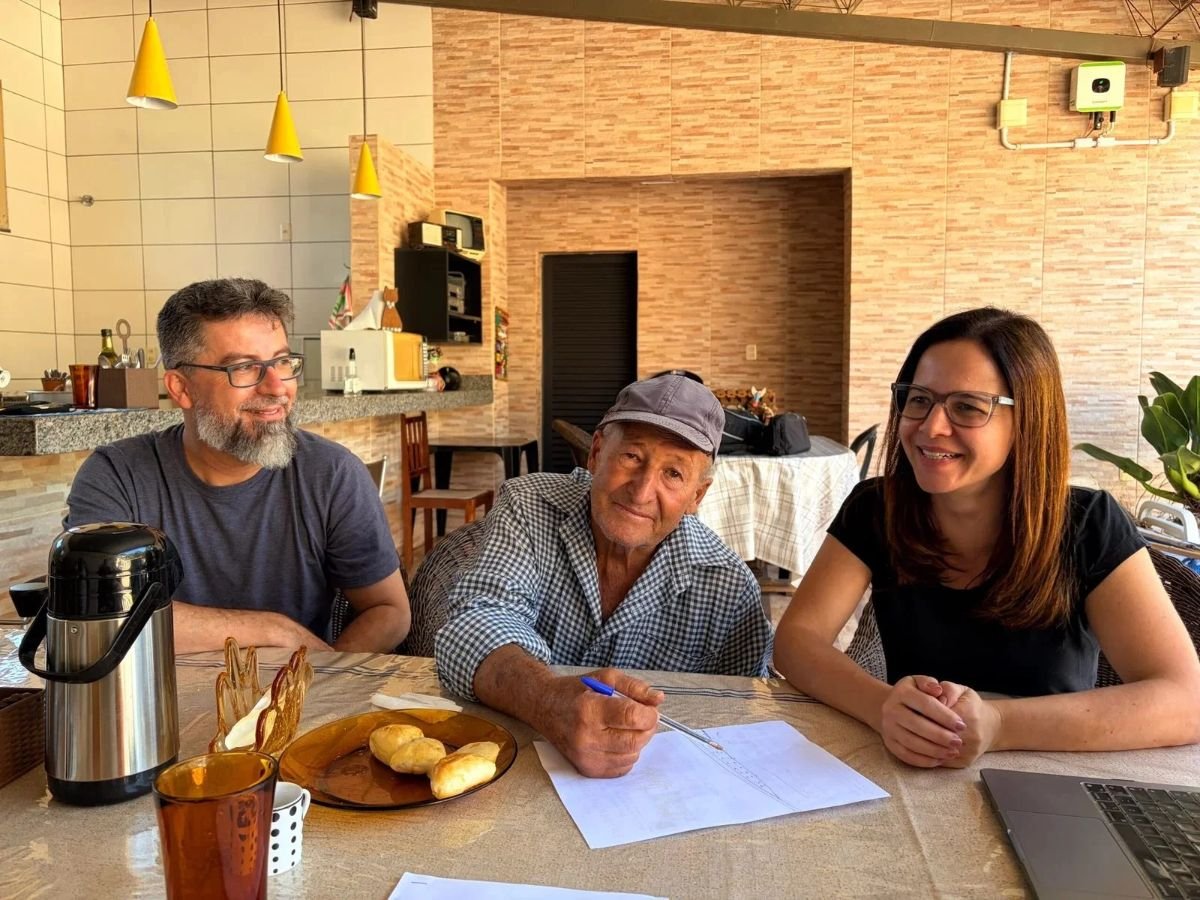
We have completed the assessment phase of the Rio São Tomé watershed revitalization project in southern Minas Gerais. Over 70 days of work, in partnership with Volar Engenharia, we visited rural properties in the municipalities of Alfenas, Machado and Serrania, talked with the landowners and designed, property by property, the interventions needed to restore springs and riparian forests.
The result is intervention plans for 40 rural properties, owned by 23 landowners, totaling 192 hectares of land to be restored.
Listening, education and trust
With each landowner, we kept an open ear. Before proposing any intervention, we sought to understand which areas they themselves saw as a priority and what their concerns were about the land and their production.
Building on those conversations, we carried out environmental education work: we presented the key concepts of restoration and showed why forests are the best allies of springs, protecting the soil, holding rainwater and keeping streams alive. This awareness-raising made a difference. In many cases, landowners who were initially reluctant changed their minds and decided to join the project.
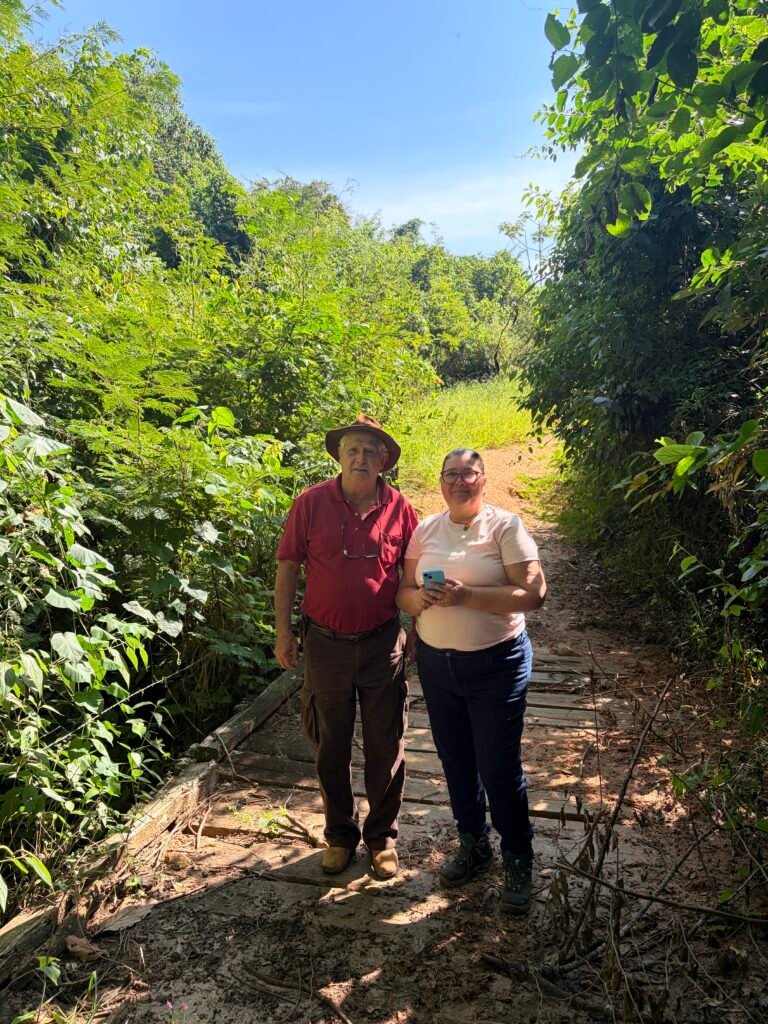
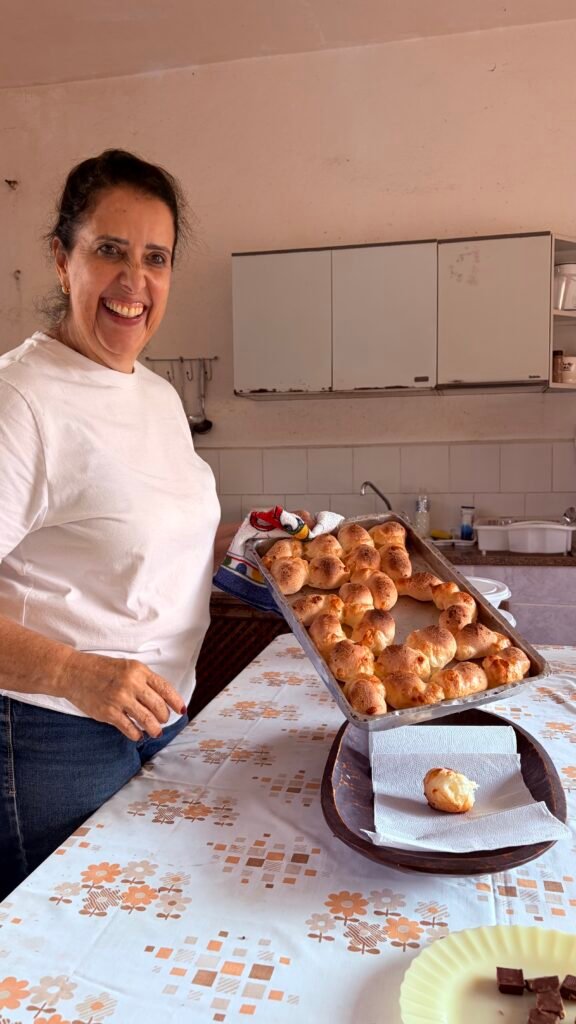
It is worth highlighting: landowners receive no cash payment. The project is fully funded by CPR Furnas, and landowners receive all the services: planting and two years of maintenance of the areas. They signed on because they understood the importance of protecting water and saw how restoration can add value to their farms.
How the work was done
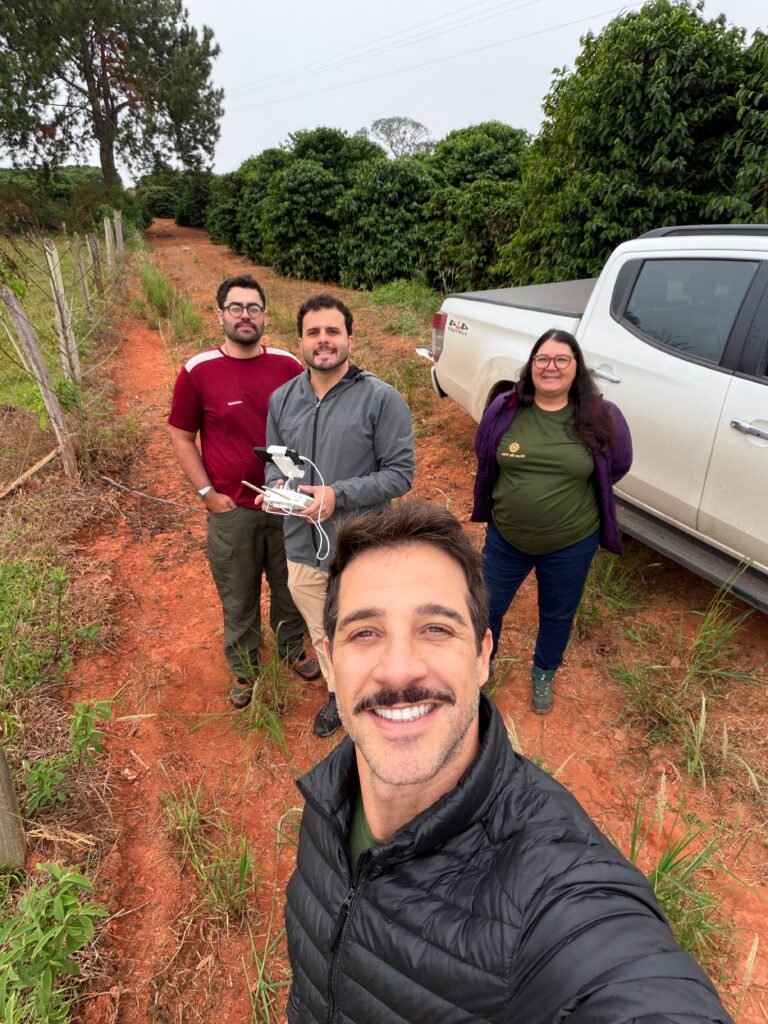
Every property went through the same steps: landowner engagement and signing of the participation agreement, document gathering, a drone survey, a field assessment and, finally, a restoration plan with maps. The first field phase alone involved 36 hours of flights and 24 orthomosaics, the high-resolution aerial images we use to accurately map springs, streams and degraded areas.
A watershed of small and medium-sized properties
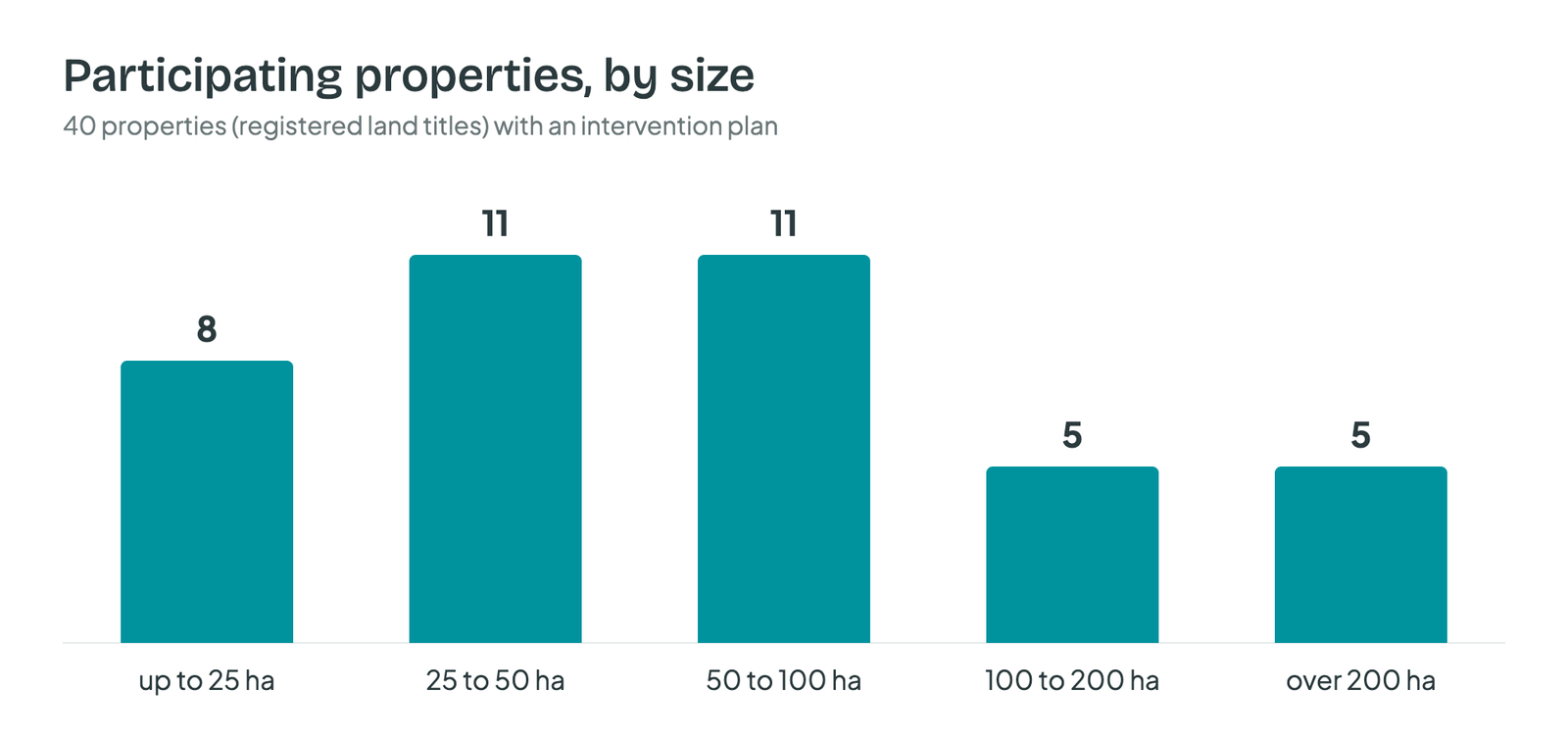
O perfil dos imóveis confirma algo que defendemos desde o início da Ilhas de Vida: no sul de Minas, a restauração passa pelas pequenas e médias propriedades. A área mediana dos imóveis atendidos é de cerca de 58 hectares, e três em cada quatro têm até 100 hectares.
Onde estão as intervenções
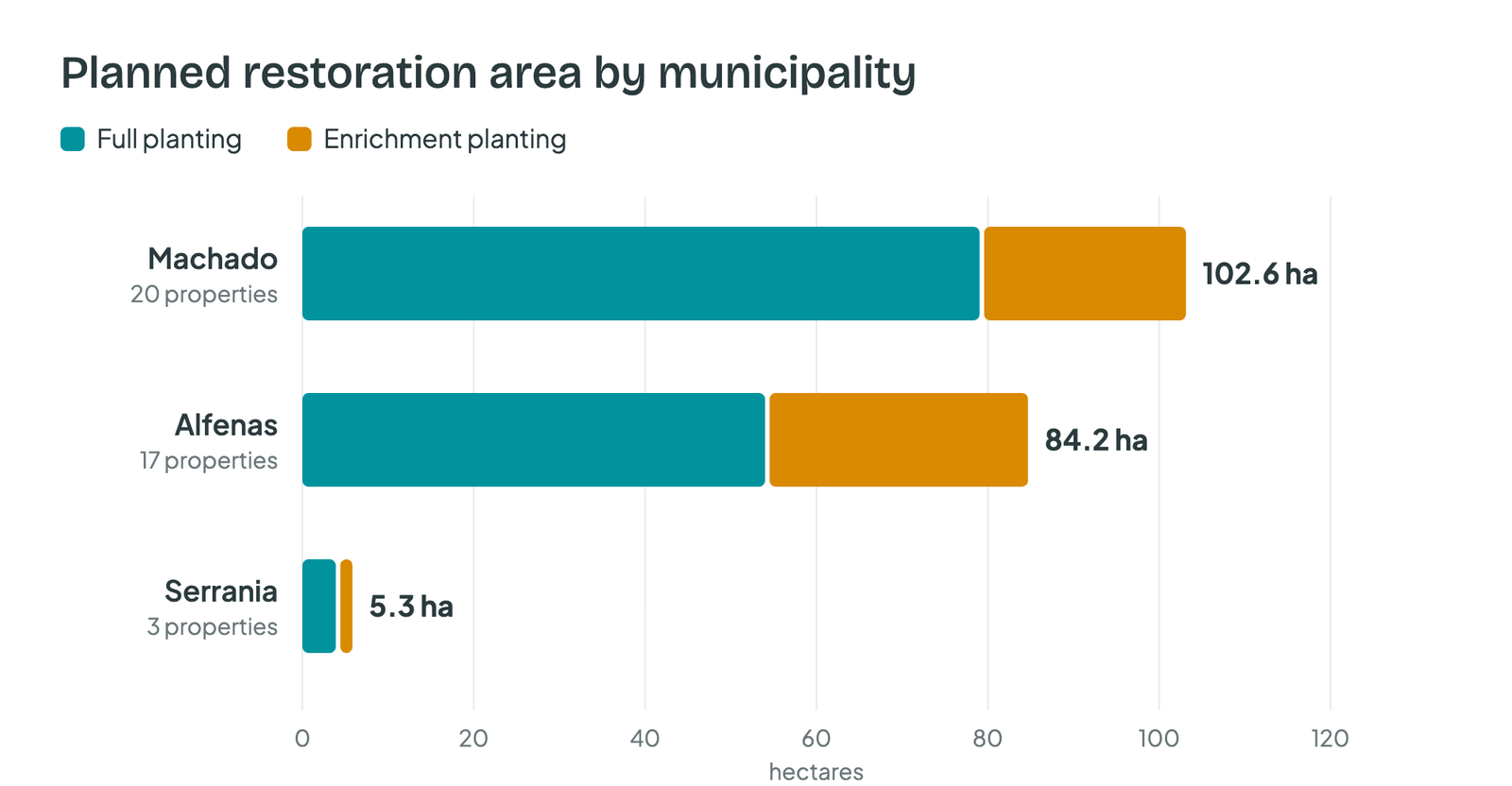
Machado accounts for most of the planned area, with 102.6 hectares across 20 properties, followed by Alfenas, with 84.2 hectares across 17 properties. In Serrania, there are 5.3 hectares across 3 properties.
What kind of restoration
Each area was assigned the strategy best suited to its condition:
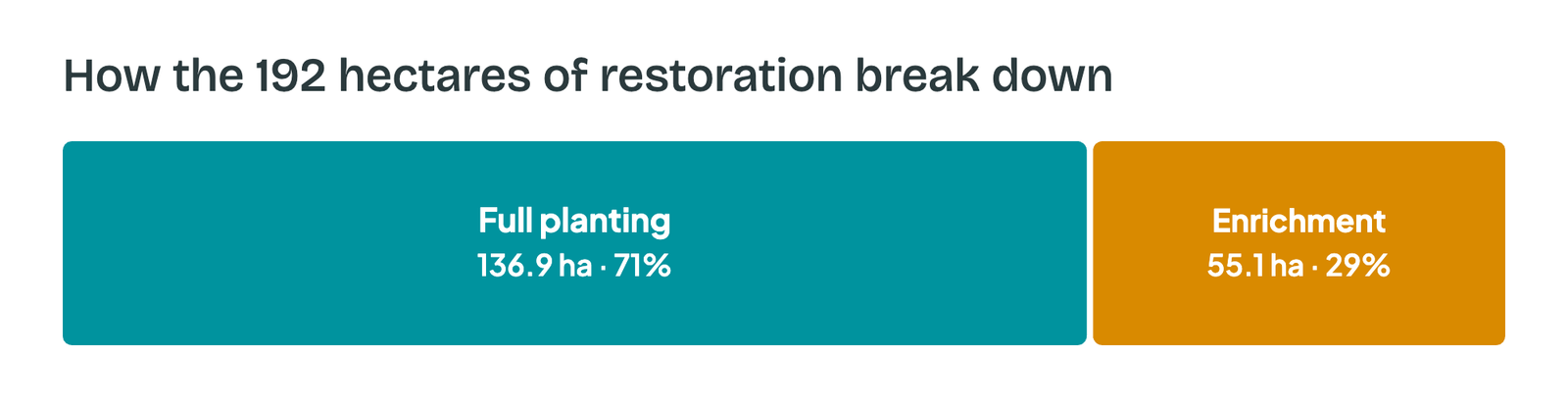
- Full planting (136.9 ha): in areas with no native vegetation, such as pastures along rivers and around springs, with seedlings planted at 3 x 2 meter spacing.
- Enrichment planting (55.1 ha): in areas that already have some vegetation but need reinforcement, with about 800 seedlings planted per hectare.
To protect these areas and allow the forest to grow, the plans also include about 37 kilometers of fencing, 52 livestock water troughs, so cattle can drink without entering the protected areas, and 10 small retention basins (barraginhas) to control erosion and help rainwater soak into the soil.
Next steps
This first phase covered assessment, engagement and planning. Implementation, including planting, fencing and soil conservation works, still depends on a new public tender. The plans are ready so that, once that phase is contracted, restoration can move quickly from paper to the ground.
We thank the landowners who opened their gates to the project and Volar Engenharia for the partnership. We keep working to regenerate ecosystems, reconnect landscapes and build new futures.

Written by André Lage